Shingle Repair in Ottawa: What to Do After Wind Damage
After wind damage, check the roof from the ground, photograph missing or lifted shingles, catch any leak inside and book an inspection. A few damaged shingles is a repair, and most repairs we do cost $300 to $1,200.
High winds can damage asphalt shingles without making the problem obvious from the ground. A shingle may be completely blown off, lifted at one edge, or creased while still appearing to be in place. Our roof repair crew in Ottawa inspects wind-damaged shingles and gives you a written estimate.
If you have recently had strong winds in Ottawa, the first step is not automatically to replace the roof. The right response depends on what was damaged, how widespread the damage is, the condition of the existing shingles, and whether water has reached the roof system underneath.
How Wind Damages Asphalt Shingles
Asphalt shingles are mechanically fastened to the roof deck and, depending on the product, also use a factory-applied sealant strip to bond overlapping shingles.
During high winds, several things can happen:
- Shingles can be lifted or torn away.
- Shingle tabs can break or crease.
- Nails or fasteners can become exposed if a shingle moves.
- Ridge-cap shingles can be damaged or displaced.
- Debris can strike and damage the shingles.
- Existing weaknesses can become more obvious after a storm.
Wind does not necessarily damage every part of a roof equally. Roof edges, eaves, rakes, ridges, hips, and areas around roof penetrations can experience different wind forces from the middle of a roof slope.
The age and condition of the shingles also matter. Older or already deteriorated shingles may be more vulnerable to losing tabs or breaking during severe weather.
How to Spot Wind Damage
Some wind damage is easy to see. Other damage requires a closer inspection.
From the ground, look for:
- Missing shingles
- Shingles that appear raised or uneven
- Exposed dark areas where shingles or tabs are missing
- Loose or displaced ridge caps
- Shingle pieces or granules on the ground
- Visible damage around roof edges
- Debris that may have struck the roof
Do not climb onto the roof to inspect it yourself, especially when the roof is wet, icy, steep, or otherwise difficult to access. A professional can inspect the roof using appropriate safety equipment.
Missing shingles
A missing shingle or missing tab is usually straightforward to identify. You may see the exposed underlayment or roof deck, depending on the location and extent of the loss.
A missing shingle should be addressed promptly because the exposed area can be vulnerable to water entry and further weather damage.
Lifted shingles
A lifted shingle may still be attached but no longer sit flat against the roof.
This can happen when wind gets underneath the shingle and breaks or weakens its bond with the shingle below. A lifted shingle is not necessarily an emergency, but it should be inspected rather than simply pressed back down.
Creased shingles
A shingle can also be bent or creased by wind.
A visible crease, torn tab, or damaged fastening area may mean the shingle cannot simply be put back into position. The correct repair depends on the extent and location of the damage.
What About Ridge Caps?
Ridge caps are particularly exposed because they sit along the highest parts of the roof.
After a major wind event, check for:
- Missing ridge caps
- Caps that are visibly shifted
- Exposed fasteners
- Broken or damaged shingles around the ridge
Damage at the ridge can allow water to enter and may also leave surrounding shingles vulnerable to additional wind damage.
Check for Signs of a Roof Leak
Wind damage does not always produce an immediate leak, so it is worth checking the interior of the home after a significant storm.
Look for:
- Water stains on ceilings or walls
- Damp insulation
- Wet areas in the attic
- Dripping water
- Moisture around roof penetrations
- Water stains around chimneys, vents, or skylights
Mold should not automatically be treated as evidence of a recent roof leak. It can also develop because of longer-term moisture or condensation problems in an attic.
If you find active water intrusion, contact a roofing professional promptly. If water is reaching electrical components, treat the situation as a potential electrical hazard and contact an appropriate professional.
Wind Damage vs. Normal Wear
Not every damaged-looking shingle was damaged by the latest storm.
Asphalt shingles naturally change as they age. Depending on their condition and exposure, you may see:
- Granule loss
- Surface wear
- Cracking
- Curling
- Blistering
- Brittle or deteriorated material
The important question is not simply whether a shingle looks old. The inspection should consider the pattern, location, and type of damage.
For example, a group of recently lifted shingles concentrated on one roof slope may warrant a different diagnosis from widespread deterioration across an older roof.
A professional should distinguish storm-related damage from normal aging, installation deficiencies, and pre-existing deterioration.
Does Poor Ventilation Cause Wind Damage?
Roof ventilation is important, but it should not be presented as a universal explanation for shingles blowing off.
A properly designed attic ventilation system helps manage heat and moisture in the attic. Inadequate ventilation can contribute to problems such as excessive attic moisture and, in some circumstances, ice-dam-related issues.
However, ventilation is not a substitute for proper shingle installation, fastening, or roof-edge detailing, and it does not by itself explain every case of wind damage.
If ventilation appears to be contributing to a roofing problem, it should be assessed as part of the overall roof and attic system.
Can Shingles Be Repaired in Cold Weather?
Ottawa’s weather can make roofing repairs more complicated during the colder months.
Some roofing products have specific installation temperature requirements or recommendations. Shingle sealant strips may also behave differently in cold weather and may not immediately develop the same bond they would under warmer conditions.
That does not mean every winter roof repair must wait until spring. It means the repair needs to be performed using an appropriate method for the product and weather conditions.
Depending on the situation, a roofer may need to take additional steps to secure a replacement shingle or damaged area properly.
The repair method should follow the shingle manufacturer’s installation requirements rather than relying on a one-size-fits-all approach.
What to Do After a Windstorm
If you suspect wind damage, take a few simple steps.
1. Look from the ground
Check the roof from several sides of the property. Look for missing or displaced shingles, damaged ridge caps, and debris.
2. Check the attic
If it is safe to do so, look for signs of water intrusion or moisture.
3. Photograph what you can safely see
Take photos of:
- Missing shingles
- Visible roof damage
- Debris
- Interior water stains
- Damaged ceilings or walls
Avoid climbing onto the roof just to get a better photograph.
4. Arrange a professional inspection
A roofer can determine whether the visible problem is isolated or part of a larger area of damage.
5. Protect active leaks
If water is entering the home, the immediate priority is preventing additional interior damage. Temporary protection may sometimes be appropriate until a permanent repair can be completed.
Do not assume that a tarp or temporary covering is a permanent solution. It should be installed safely and appropriately for the roof and weather conditions.
What Should a Proper Shingle Repair Include?
A professional repair should address more than the visible shingle.
Depending on the damage, the roofer may need to inspect:
- Adjacent shingles
- Fasteners
- Underlayment, where accessible
- Roof decking, where accessible
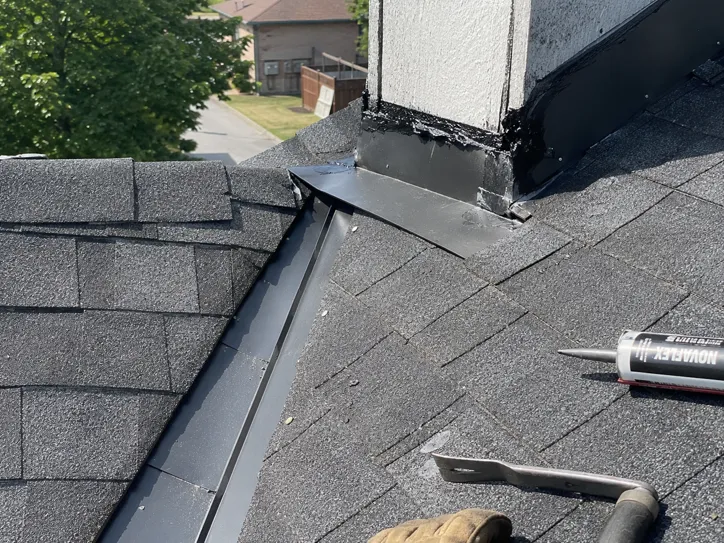
- Flashing
- Roof penetrations
- Ridge caps
- The surrounding roof area
The damaged material should be removed carefully, and the replacement should be compatible with the existing roofing system.
The roofer should also make sure the replacement shingle is properly fastened and that the repair method is appropriate for the product and current conditions.
Simply applying sealant over a damaged shingle is not automatically an adequate repair.
Can a Missing Shingle Be Matched?
Sometimes.
The right match depends on the age, manufacturer, product line, colour, and amount of weathering on the existing roof.
Even if you find a shingle with the same colour name, a new shingle can look different from an older one because the existing roof has been exposed to sunlight and weather for years.
For a small repair, a visible colour difference may be unavoidable. A roofer can explain what matching options are realistically available before the repair begins.
Repair or Replace the Entire Roof?
Wind damage does not automatically mean you need a new roof.
A repair may make sense when:
- Damage is limited to a small area
- The rest of the roof is in good condition
- The shingles are relatively recent
- Matching replacement material is available
- The underlying roof system appears sound in the affected area
Replacement may need to be considered when:
- Damage is widespread
- The roof is already near the end of its expected service life
- Shingles are deteriorated across large areas
- Repairs would be extensive or recurring
- Suitable replacement shingles are no longer available
The decision should be based on the actual condition of the roof rather than the presence of one or two damaged shingles.
What Does Shingle Repair Cost in Ottawa?
There is no reliable single price for wind-damage repair.
The cost can depend on:
- Number of damaged shingles
- Roof pitch and accessibility
- Type of roofing material
- Whether ridge caps are damaged
- Whether flashing or other components are involved
- Whether the damage is isolated or widespread
- Availability of matching shingles
- Whether temporary emergency protection is required
A small, accessible repair can be very different from a repair involving multiple roof slopes or underlying damage.
A proper inspection should come before a firm repair recommendation.
What About Insurance?
Whether wind damage is covered depends on the specific insurance policy, the circumstances of the loss, the age and condition of the roof, and the insurer’s assessment.
A roofing contractor can document visible physical damage, photographs, and repair recommendations. The contractor does not determine whether an insurance claim will be approved.
If you plan to make a claim, keep photographs, inspection reports, invoices, and other relevant documentation.
It is also useful to understand whether the insurer considers the damage to be storm-related, pre-existing, or the result of normal deterioration.
How RoofRoof Can Help
If you suspect wind damage, RoofRoof can inspect the roof and document the condition of the affected areas.
The inspection should focus on identifying what is damaged rather than assuming that every visible imperfection is storm-related.
Depending on the findings, the recommendation may be:
- A localized shingle repair
- Repair of several affected areas
- Temporary protection followed by a permanent repair
- Further investigation of the roof system
- Full roof replacement when the condition of the roof warrants it
The goal is to match the scope of the work to the condition of the roof.
Ottawa Weather and Wind Damage
Ottawa roofs have to withstand a range of weather conditions throughout the year, including strong winds, snow, freeze-thaw cycles, and temperature changes.
Severe weather can expose weaknesses that were already present in a roofing system. That is why an inspection after a significant wind event should consider both the storm damage and the overall condition of the roof.
A roof that loses one shingle during a severe storm is a different situation from an older roof with widespread deterioration and multiple areas of wind-related damage.
Frequently Asked Questions
Should I replace my whole roof if one shingle is missing?
Not necessarily. If the damage is isolated and the rest of the roof is in good condition, a localized repair may be appropriate.
Can I just put the missing shingle back?
If a shingle has been completely removed, simply placing it back is generally not enough. It needs to be installed and fastened correctly, using a repair method appropriate for the roofing product.
How do I know if a shingle is lifted or just looks uneven?
A professional inspection can determine whether the shingle has lost its bond or has been damaged. Avoid lifting or manipulating the shingle yourself.
Should I call a roofer immediately after a storm?
If you have an active leak, extensive missing shingles, or obvious roof damage, prompt action is appropriate. For minor suspected damage with no interior water intrusion, you can still arrange an inspection without treating it as an emergency.
Can a roofer tell me whether my insurance claim will be approved?
No. A roofer can document physical damage and provide a repair estimate or recommendation. Coverage is determined by your insurance policy and insurer.
Is every shingle problem caused by wind?
No. Shingles can deteriorate because of age, weather exposure, installation problems, impact, and other causes. The pattern and condition of the damage matter.
What if I cannot find matching shingles?
Exact matching is not always possible, particularly on older roofs. A roofer can determine whether a reasonably compatible replacement is available or whether the condition of the roof makes a larger repair more appropriate.
The Bottom Line
If strong winds have damaged your roof, do not assume that you need either a complete replacement or a quick patch.
Start with an inspection.
The important questions are:
- What is damaged?
- Is the damage isolated or widespread?
- Has water entered the roof system or home?
- Is the existing roof otherwise in good condition?
- Can the damaged shingles be properly repaired and matched?
A careful inspection can answer those questions and help you choose the appropriate next step without doing more work than the roof needs.