Roof Flashing Repair in Ottawa: Chimneys, Skylights, Walls and Other Common Leak Points
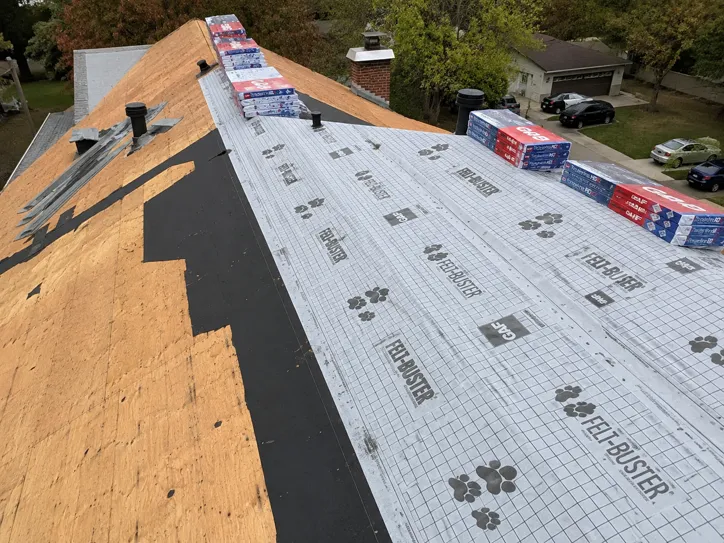
Flashing repair means resealing or replacing the metal at chimneys, skylights, walls and valleys, and most of our repairs cost $300 to $1,200. Roof leaks often show up around chimneys, skylights, walls, valleys and roof penetrations. These areas depend on flashing and surrounding roofing materials to direct water over the roof surface and away from joints and openings.
The difficult part is that the location of a ceiling stain does not always tell you where the water entered. Water can travel along roof decking, rafters and other framing before becoming visible indoors. During an Ottawa winter, attic condensation and ice dams can also create stains or dripping that look similar to a roof leak.
That is why a lasting repair starts with finding the actual source of the water rather than sealing the first suspicious gap. Our roof repair crew traces the leak first, and we make replacement pieces through our custom roof flashing service.
What Roof Flashing Does
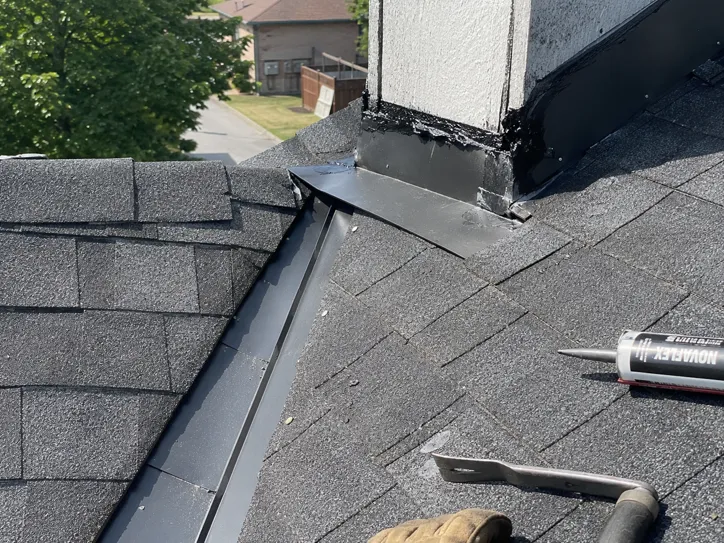
Roof flashing is usually made from metal and installed where roofing changes direction, meets a vertical surface or surrounds an opening.
Its purpose is to direct water over the roof covering and away from joints and penetrations.
On an asphalt shingle roof, flashing works as part of a layered drainage system. Shingles, underlayment and flashing overlap so water continues moving downhill instead of reaching the roof deck.
Different areas require different flashing details.
| Flashing type | Typical location | Purpose |
|---|---|---|
| Step flashing | Walls, dormers and chimney sides | Directs water from the wall joint back onto the roof |
| Counter-flashing | Chimneys and masonry walls | Protects the upper edge of the flashing below |
| Kickout flashing | Bottom of roof-to-wall joints | Diverts runoff away from the wall and siding |
| Valley flashing | Where two roof slopes meet | Handles concentrated water flow |
| Vent or pipe flashing | Plumbing vents and roof penetrations | Directs water around the penetration |
| Skylight flashing | Around skylights | Routes water around the skylight opening |
The correct detail depends on the roofing material, roof slope, wall construction and, in some cases, the installation requirements of the skylight or other roof-mounted product.
Why Caulk Alone Usually Does Not Solve a Flashing Problem
Sealant has legitimate uses in roofing, but it is not a substitute for properly installed flashing.
Flashing controls the path water takes through a system of overlapping materials. Caulk seals a specific joint or connection.
If flashing is missing, damaged or installed incorrectly, applying another bead of sealant may stop water temporarily without correcting the underlying drainage problem.
This is especially common around chimneys. A leak develops, someone applies more caulk around the visible metal, and the area appears fixed until the sealant deteriorates or water finds another route into the roof assembly.
When a previously repaired area keeps leaking, the surrounding shingles or other materials may need to be removed so the flashing and underlayment can be inspected directly.
The goal should be to correct the water path, not simply cover the visible gap.
How to Narrow Down the Source of a Roof Leak
A ceiling stain is evidence of moisture. It is not a complete diagnosis.
Before repairs begin, pay attention to when and where the water appears.
Useful observations include:
- Whether the leak happens during rain, snowmelt or both
- Whether strong winds make the problem worse
- Whether the stain appears mainly during very cold weather
- Whether moisture is concentrated in one area or spread across the attic
- Whether roofing work was recently completed nearby
- Whether the stain grows after each storm
- Whether the problem has been repaired before
These details can help distinguish an exterior roof leak from condensation, ice damming or another attic moisture problem.
If you can safely view the attic from an access point, look for the highest visible wet area rather than assuming the ceiling stain directly below is the source.
Chimney Flashing Leaks
Chimneys are among the more complicated roof penetrations because several materials meet in a relatively small area: shingles, flashing, masonry and often a chimney cap or crown.
On the sides of a chimney, step flashing is typically integrated with individual shingle courses. Counter-flashing overlaps the upper portion of that flashing and helps prevent water from getting behind the roof-to-chimney joint.
A proper chimney inspection should look at more than the visible metal.
Possible problem areas include:
- Displaced or corroded step flashing
- Damaged or loose counter-flashing
- Problems with flashing on the upslope side of the chimney
- Loose or damaged shingles
- Failed sealant where sealant is required
- Cracked mortar or deteriorated masonry
- Damage to the chimney cap or crown
- Moisture damage in the roof deck or framing below
Water near a chimney can also enter through damaged masonry higher up and travel downward before reaching the roof.
For that reason, repeatedly sealing the roof-to-chimney joint may not solve the problem if the chimney itself is allowing water in.
A useful inspection considers the chimney and roofing as one system before deciding what needs to be repaired.
Skylight Leaks
Water around a skylight does not automatically mean the skylight needs to be replaced.
Several components can allow water into the roof assembly, including:
- Upper or head flashing
- Side flashing
- Lower flashing
- Surrounding shingles
- Underlayment or membrane
- Skylight frame
- Glazing and seals
- Roof deck surrounding the opening
A skylight leak should therefore be assessed as a complete system.
The timing of the moisture can provide useful clues.
Water that appears during rainfall suggests the exterior drainage system, flashing or surrounding roofing should be investigated.
Moisture that develops mainly on the interior glass during cold weather may be condensation instead.
If the skylight itself remains in good condition, repairing the surrounding roofing or flashing may be enough. In other cases, shingles may need to be removed so the underlayment and flashing sequence can be inspected and rebuilt correctly.
The skylight should not be condemned before the source of the leak is identified.
Roof-to-Wall and Dormer Leaks
Whenever a sloped roof meets a vertical wall, step flashing is commonly used to protect the joint.
Each piece works with an individual shingle course. The pieces overlap so runoff is directed back onto the roof rather than behind the siding or wall finish.
The lower end of a roof-to-wall joint is particularly important.
Kickout flashing redirects water away from the wall and toward the gutter or exterior drainage path. If that detail is missing, damaged or poorly installed, runoff can reach the siding, trim or wall assembly.
Warning signs include:
- Staining on siding
- Soft or deteriorated trim
- Visible gaps along the joint
- Damaged shingles beside the wall
- Moisture inside the wall or ceiling below
- Previous patches
- Heavy amounts of sealant around the joint
A roofer should inspect both the roofing and the wall-side components.
Sometimes the flashing is intact while the siding, trim or wall drainage layer has failed. In other cases, the roof flashing itself is the source.
Diagnosis matters because the repairs are different.
Valley Leaks
Roof valleys carry more water than most other areas because runoff from two roof slopes is concentrated into one drainage path.
That makes the condition of the valley especially important.
Common problems include:
- Damaged or displaced shingles
- Deteriorated valley flashing
- Torn or exposed underlayment
- Debris accumulation
- Previous repairs that altered the drainage path
- Ice buildup
- Physical damage from branches or storms
Leaves and other debris can interfere with drainage and increase the chance of water reaching vulnerable joints or damaged roofing.
Valleys can also be dangerous places to inspect on foot, particularly when the roof is steep, wet, snowy or icy.
Many visible problems can be identified from the ground with binoculars or a phone camera rather than by climbing onto the roof.
Vents and Pipe Penetrations
Plumbing vents and other roof penetrations are smaller than chimneys or skylights, but they are common places for localized leaks.
The flashing around a pipe typically includes a base integrated with the roofing and a boot or collar around the pipe itself.
Some of these components can deteriorate over time.
When inspecting a vent or pipe penetration, check:
- The flashing base
- The boot or collar
- The shingles surrounding the penetration
- Loose or exposed fasteners
- Sealant at locations where it is required
- The underlayment and roof deck if accessible
A cracked or deteriorated boot may be the entire problem.
However, the surrounding roofing should still be checked for moisture damage before the repair is considered complete.
Roof Leak or Attic Condensation?
Ottawa winters can make roof leak diagnosis more complicated.
Warm, humid air from inside the house can enter the attic through gaps around light fixtures, wiring, plumbing penetrations, attic hatches and other openings.
When that warm air reaches cold roof sheathing, moisture can condense or freeze as frost.
When conditions warm up, that frost can melt and create dripping or ceiling stains that homeowners may mistake for a leaking roof.
A localized wet area below a chimney, vent or other roof penetration is more consistent with an exterior leak, particularly when it appears during rainfall.
Widespread frost or dampness across large areas of roof sheathing is more likely to involve indoor air leakage and attic moisture.
These are clues rather than definitive tests, and both problems can occur at the same time.
If condensation is the main issue, simply adding more attic ventilation may not correct it.
Air sealing and insulation should also be evaluated because controlling warm indoor air entering the attic is an important part of managing winter moisture.
A flashing repair will not solve an attic condensation problem caused by indoor air leakage.
Ice Dams and Winter Roof Leaks
Ice dams create another possible source of winter leakage.
Heat escaping into the attic can warm part of the roof and melt the snow above it.
The meltwater then runs toward colder areas near the eaves, where it freezes again.
As ice accumulates, additional meltwater can collect behind it and potentially reach beneath the roof covering.
A leak that appears during snowmelt or a freeze-thaw cycle may therefore involve several factors:
- Ice damming
- Air leakage into the attic
- Insulation deficiencies
- Damaged shingles
- Flashing defects
- A combination of these conditions
Finding water near a chimney or wall during snowmelt does not by itself prove that the flashing failed.
The surrounding roof and attic conditions should be considered before deciding what needs to be repaired.
What a Proper Flashing Repair May Involve
The scope of a flashing repair depends on what failed.
A small problem may involve replacing a single damaged component. A more complicated leak can require removing shingles and rebuilding part of the roof detail.
Depending on the condition, repair work may include:
- Removing or lifting nearby shingles.
- Exposing the flashing and underlayment.
- Checking the roof deck for moisture or deterioration.
- Replacing damaged or incorrectly installed flashing.
- Correcting improper overlaps.
- Replacing damaged roofing materials.
- Reinstalling the system so water drains toward the exterior.
- Applying compatible sealant only where the roofing detail requires it.
The important point is that the repair should restore the intended drainage system rather than simply cover the visible opening.
If a contractor proposes only applying sealant to a leak that has returned several times, ask what was done to verify the condition of the flashing underneath.
When a Roof Leak Needs Immediate Attention
Some flashing problems can be inspected and scheduled for repair. Others require prompt action.
Contact a roofing contractor promptly if:
- Water is actively entering the house
- A storm has displaced roofing or flashing
- Shingles or metal components are missing
- Water is close to electrical fixtures or wiring
- A ceiling is sagging or holding water
- There is visible structural damage
Move furniture and belongings away from the affected area if it is safe to do so.
Do not stand beneath a ceiling that is bulging with water.
Avoid climbing onto a wet, icy, snowy or storm-damaged roof.
Photos taken safely from the ground can be useful when discussing damage with a roofer or insurance provider.
What Homeowners Can Check Safely
You do not need to climb onto the roof to gather useful information.
From the ground, look for:
- Missing, lifted or damaged shingles
- Visibly loose flashing
- Displaced pieces of metal
- Branches or storm debris
- Damage around chimneys and vents
- Debris in valleys
- Gutter or eavestrough problems
- Deterioration where roofing meets a wall
Use binoculars or the zoom function on a phone camera when necessary.
Inside the house, record where stains appear and what weather conditions seem to trigger them.
If the attic is accessible, inspect it only from a safe walking surface or from the access opening.
Do not walk on ceiling drywall or loose insulation.
Look for the highest visible wet area and note whether moisture appears concentrated in one location or widespread across the attic.
Photographs can also help document whether the problem changes over time.

Questions to Ask a Roofing Contractor
A good repair recommendation should explain what failed and how the proposed work will correct it.
Useful questions include:
- Where is the water entering?
- What evidence points to that location?
- Is the problem flashing, roofing, masonry, a skylight or another penetration?
- Will shingles need to be removed to inspect the area?
- Will the roof deck and underlayment be checked?
- Is any wood damaged?
- Are you replacing damaged flashing or sealing an existing detail?
- If sealant is being used, what role does it play in the repair?
- Can you provide photos of the damaged area before and after the work?
- Is the repair covered by a workmanship warranty?
- Should similar flashing details elsewhere on the roof be inspected?
A contractor should be able to explain both the suspected cause of the leak and how the repair will restore proper drainage.
A vague recommendation to simply “seal the leak” deserves further explanation.
Cost of Roof Flashing Repair in Ottawa
There is no single price for flashing repair because the amount of work can vary considerably.
Most roof repairs we do cost $300 to $1,200. Smaller, accessible repairs sit at the lower end, and complicated leak repairs cost more.
Actual repair cost depends on factors such as:
- How difficult the area is to access
- Whether shingles need to be removed
- The type and extent of flashing damage
- Chimney or masonry work
- Skylight work
- Damaged underlayment or roof decking
- The size of the affected area
- Whether more than one defect is contributing to the leak
The roof should be diagnosed before the repair scope and price are finalized.
A cheap surface repair is not a bargain if the underlying leak remains.
When Flashing Repair Is Not Enough
Many isolated flashing problems can be repaired without replacing the entire roof.
A broader roof assessment may make more sense when there are:
- Several unrelated leaks
- Widespread shingle deterioration
- Significant roof-deck damage
- Repeated failures at different flashing details
- Extensive storm damage
- Numerous previous repairs that continue to fail
The age and overall condition of the roofing system matter as well.
If the roof is approaching the end of its serviceable life, repeatedly repairing individual leaks may eventually make less financial sense than addressing the roof more comprehensively.
That decision should be based on the condition of the entire roofing system, not one leaking chimney or skylight.
Roof Flashing Repair FAQ
Can I fix a flashing leak with caulk?
Sometimes sealant is part of a properly constructed flashing detail, but it cannot compensate for missing, damaged or incorrectly installed flashing.
If the leak is caused by the way the flashing overlaps the roofing, that detail needs to be corrected.
Why does chimney flashing leak?
Possible causes include loose flashing, incorrect installation, damaged counter-flashing, deteriorated masonry, roofing damage and defects elsewhere on the chimney.
A proper inspection should consider both the roofing and the chimney.
Does a leaking skylight need to be replaced?
Not always.
The leak may come from the flashing, surrounding shingles, underlayment or another part of the roof rather than the skylight itself.
The full assembly should be inspected before replacement is recommended.
Why does my roof leak only in winter?
Winter leaks can result from ice dams, snowmelt, attic condensation or an existing roofing defect that becomes noticeable during freeze-thaw conditions.
The timing and distribution of the moisture can help narrow down the cause.
Can attic condensation look like a roof leak?
Yes.
Moist indoor air entering a cold attic can create frost or condensation on roof sheathing.
If moisture is widespread and primarily appears during cold weather, attic air leakage, insulation and moisture control should be investigated rather than assuming a single flashing detail has failed.
Is damaged flashing an emergency?
Active water entry should be addressed promptly.
Loose or damaged flashing that has not started leaking should still be inspected because future rain, wind or snowmelt may allow water into the roof assembly.
Does all flashing need to be replaced when the roof is replaced?
Not automatically.
Existing flashing should be evaluated during reroofing. Its condition, installation and compatibility with the new roofing system determine whether it can remain or should be replaced.
Need a Roof Leak Diagnosed?
If you are seeing water near a chimney, skylight, wall, valley, vent or other roof penetration, the first step is identifying where the water is entering and why.
RoofRoof provides roof flashing and leak repair services in Ottawa, including repairs around chimneys, skylights, walls, valleys and other roof penetrations.
A useful roof inspection should answer three questions:
Where is the water entering?
Why did that part of the roof fail?
What repair will restore the correct drainage path?
Once those questions are answered, it becomes much easier to distinguish a proper flashing repair from a temporary patch.